

7.
Published onThe responses to the following information requests were taken into account in determining the assigned category and developing the assessment:
Ministry of Energy
https://drive.google.com/file/d/1R2DVDIEcqLcYp8z66G7UsopAj8QERrDO/view?usp=drive_link
More information:
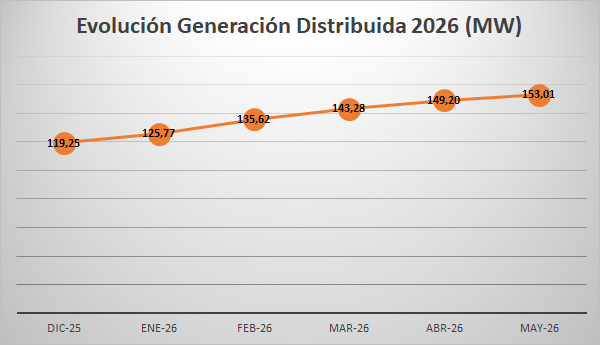
It is important to consider that the target of 1,000 MW by 2030 is not particularly ambitious compared with regional experience. Chile, with less than half the population of Argentina, established the same absolute target—1 GW by 2030—and had already reached 498 MW by April 2026 (Review Energy LATAM, 2026). Brazil, meanwhile, with a population four times larger, was projected to reach 50 GW of distributed generation by the end of 2026, with a target of 67.5 GW by 2030 (Canal Solar, 2026).
- Decreto PEN 986/2018, Anexo I, reglamentario Ley 27.424
- Reportes de Avance - Implementación de la Ley 27.424
- Pascual, S; Quaini, A; Subirachs, C, Aguilar, S (2025). Caso de estudio: Crédito Fiscal para la generación distribuida en Argentina. Base de Datos sobre Instrumentos Normativos para la Descarbonización. FLACSO Argentina
-
FIRST ASSESSMENT OF THIS OBJECTIVE CONDUCTED IN AUGUST 2025
Category
Expected compliance
Detail
According to the latest available progress report from the Ministry of Economy (June 2025), renewable distributed generation capacity stood at 78.06 MW. Given that an average monthly growth rate of 6% was recorded during 2024, with a similar increase observed in the months of 2025, it can be assumed that, if this growth rate continues, the target would be reached by mid-2029. However, it is important to highlight that the target of 1,000 MW by 2030 is not particularly ambitious when compared with regional experience.